Cockroaches at Home: Effective Ways to Get Rid of Them Safely and Fast

What Are Cockroaches and Why Do They Enter Homes?
Cockroaches are highly adaptable insects that have survived for millions of years due to their remarkable ability to find food, moisture, and shelter in almost any environment. In homes, cockroaches are usually attracted by easy access to water, leftover food, organic waste, humidity, and dark hiding places. Even extremely clean homes can occasionally develop cockroach problems if environmental conditions are favorable.
Most indoor cockroach infestations begin when insects enter through small cracks, plumbing systems, drains, ventilation gaps, open windows, grocery bags, cardboard boxes, or neighboring apartments. In multi-unit buildings, cockroaches can spread rapidly from one unit to another through shared pipes and wall voids.
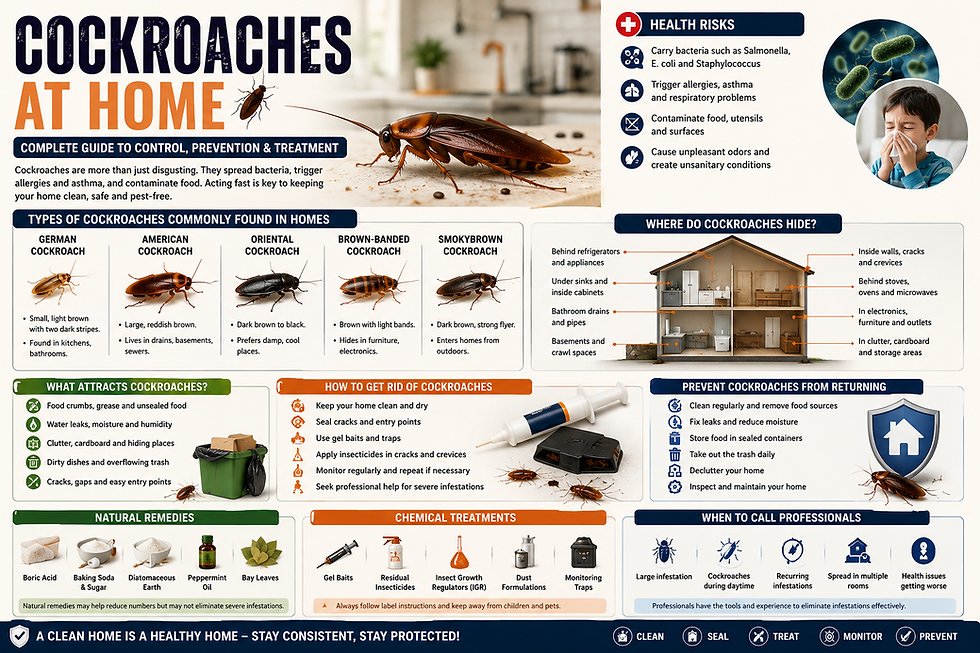
Cockroaches are primarily nocturnal. This means homeowners often do not notice them until the infestation has already become significant. Seeing a cockroach during the daytime may indicate overcrowding inside hiding spots, which can suggest a larger infestation.
These insects prefer warm and humid environments. Kitchens, bathrooms, laundry rooms, storage spaces, basements, and areas behind appliances are among their favorite hiding places. Food crumbs, pet food left overnight, leaking pipes, standing water, and accumulated grease create ideal survival conditions for them.
Cockroaches are not just unpleasant household pests. They are also associated with contamination and sanitation problems. They can move through garbage, drains, sewage systems, and decaying materials before walking across kitchen counters, dishes, or food storage areas. Because of this behavior, cockroaches may spread bacteria, allergens, and potentially harmful microorganisms inside homes.
Understanding why cockroaches enter homes is one of the most important steps in long-term control. Eliminating food access, reducing moisture, sealing entry points, and maintaining consistent sanitation are essential for reducing the likelihood of future infestations.

Common Types of Cockroaches Found Indoors
Several cockroach species are capable of living inside homes, but some are far more common than others. Identifying the specific type of cockroach can help determine where they hide, how quickly they reproduce, and which control methods are most effective.
Cockroach Species | Appearance | Preferred Areas | Main Characteristics |
German Cockroach | Light brown with two dark stripes behind the head | Kitchens, bathrooms, warm indoor spaces | One of the most common indoor species; reproduces very rapidly |
American Cockroach | Large reddish-brown body | Basements, drains, boiler rooms | Often enters through sewer systems and humid environments |
Oriental Cockroach | Dark brown to black | Damp areas, basements, crawl spaces | Prefers cool and moist locations |
Brown-Banded Cockroach | Small brown body with light bands | Furniture, ceilings, electronics | Can survive in drier areas than other species |
Smokybrown Cockroach | Dark shiny brown | Attics, roofs, outdoor vegetation | Frequently enters homes from outdoor environments |

Cost of Cockroach Control and Professional Pest Treatment
The cost of cockroach treatment can vary significantly depending on the severity of the infestation, the size of the property, the treatment methods used, and the geographic location. Small isolated infestations are generally less expensive to manage, while severe infestations involving wall voids, drains, or apartment-wide spread may require multiple professional visits.
Treatment Type | Estimated Cost (US) | Estimated Cost (EU) | Description |
DIY Cockroach Baits and Traps | $10–$60 | €10–€55 | Suitable for minor infestations or early detection |
Store-Bought Insecticide Sprays | $15–$80 | €15–€70 | Temporary reduction of visible insects |
Professional Single Treatment | $100–$400 | €90–€350 | Common for mild to moderate infestations |
Severe Multi-Visit Infestation Treatment | $400–$1,500+ | €350–€1,300+ | Often required for large infestations |
Apartment Building Pest Programs | Variable | Variable | Costs may be shared across tenants or building management |
Do-it-yourself products may appear cheaper initially, but they are not always effective for larger infestations. Many over-the-counter sprays only kill visible insects while leaving hidden nests and egg cases untouched. In some situations, incorrect insecticide use can even worsen infestations by causing cockroaches to spread deeper into walls or neighboring rooms.

Health Risks Associated With Cockroaches
Cockroaches are not only unpleasant household pests but also important public health concerns. Their behavior, feeding habits, and movement through contaminated environments allow them to carry and spread various microorganisms inside homes. Although cockroaches do not usually bite humans aggressively, their presence can contribute to hygiene problems and increase certain health risks.
One of the primary concerns is bacterial contamination. Cockroaches frequently travel through drains, sewage systems, garbage areas, decaying organic matter, and contaminated surfaces before moving onto kitchen counters, dishes, food containers, and dining areas. During this process, they may mechanically spread bacteria such as Salmonella, Escherichia coli (E. coli), and other microorganisms associated with foodborne illness.
Contaminated surfaces or food may increase the risk of digestive problems, including:
Food poisoning
Diarrhea
Vomiting
Abdominal discomfort
Gastrointestinal infections
Cockroach infestations are also strongly linked to allergic reactions and asthma symptoms. Their droppings, saliva, shed skin, and decomposing body fragments contain allergenic proteins that can circulate through indoor air and settle in household dust.
Children are considered particularly vulnerable to cockroach-related allergens. Studies have shown that exposure to cockroach allergens may worsen asthma symptoms and contribute to respiratory irritation in sensitive individuals.
Common allergy-related symptoms may include:
Sneezing
Nasal congestion
Skin irritation
Chronic coughing
Wheezing
Eye irritation
Increased asthma attacks
Indoor air quality can also decline in heavily infested homes. Large cockroach populations may produce a strong musty odor that becomes embedded in furniture, fabrics, cabinets, and food storage areas.
Another overlooked issue is psychological stress. Persistent cockroach infestations may negatively affect sleep quality, comfort, and mental well-being. Some individuals develop significant anxiety, fear, or embarrassment related to infestations, especially when repeated treatments fail to resolve the problem.
Pets may also encounter indirect risks. Cats and dogs occasionally eat cockroaches, which can expose them to bacteria, parasites, or toxic substances if pesticides have been used improperly. In rare cases, cockroaches may act as intermediate carriers for certain parasites affecting animals.
Improper insecticide use creates an additional health hazard. Excessive spraying inside kitchens, around food storage areas, or near pets and children may lead to accidental chemical exposure. This is one reason why safe and targeted treatment strategies are strongly recommended.
Although cockroaches are often associated with poor sanitation, infestations can occur in many environments, including clean homes, apartments, restaurants, hospitals, and commercial buildings. Moisture availability, structural entry points, and environmental conditions frequently play major roles.
Reducing cockroach populations quickly is important not only for comfort but also for maintaining healthier indoor living conditions.

Areas of the Home Where Cockroaches Commonly Hide
Cockroaches are experts at remaining hidden during the day. They prefer dark, narrow, warm, and humid environments where they can stay protected while remaining close to food and water sources. Understanding where cockroaches commonly hide is essential for effective treatment and long-term prevention.
Kitchens are among the most common infestation sites because they provide easy access to food residues, grease, crumbs, and moisture. Cockroaches frequently hide:
Behind refrigerators
Under sinks
Inside cabinets
Around dishwashers
Near stoves and ovens
Behind microwaves
Around garbage containers
Even tiny food particles under appliances may support cockroach populations for extended periods.
Bathrooms are another high-risk area because cockroaches require water to survive. Leaking pipes, condensation, drains, and humid corners create ideal conditions. They may hide beneath sinks, behind toilets, inside wall gaps, or around plumbing systems.
Laundry rooms and utility spaces are also attractive due to warmth, moisture, and reduced human activity. Water heaters, washing machines, dryers, and floor drains are common hiding locations.
In severe infestations, cockroaches may spread into living rooms and bedrooms. Brown-banded cockroaches, in particular, are known for hiding inside:
Furniture
Closets
Upholstered items
Electrical outlets
Televisions
Routers
Gaming consoles
Computers and electronic devices
Electronic devices generate heat, which makes them attractive hiding places for some species.
Basements and crawl spaces are frequent infestation sites in humid buildings. These areas often contain clutter, cardboard boxes, stored materials, and dark protected environments that allow cockroaches to reproduce undisturbed.
Cockroaches also prefer narrow cracks and crevices. They commonly hide:
Behind baseboards
Inside wall voids
Around pipe penetrations
Under loose flooring
Inside ceiling gaps
Around door frames
Behind wallpaper
Cardboard boxes deserve special attention because cockroaches can feed on glue and hide within folded materials. Storage clutter significantly increases infestation risk by creating additional shelter opportunities.
Pet feeding areas can also attract cockroaches, especially when food bowls remain accessible overnight. Even small amounts of spilled dry food may support insect activity.
At night, cockroaches often leave hiding places to search for food and water. Using a flashlight several hours after dark can sometimes help identify infestation hotspots.
Successful cockroach control depends heavily on identifying these hidden areas. Treating only visible insects without targeting nesting locations usually provides temporary results rather than long-term elimination.
What Attracts Cockroaches Into a House?
Cockroaches enter homes primarily in search of three essential survival needs: food, water, and shelter. Once these insects discover a stable indoor environment that provides these resources, they can reproduce rapidly and establish persistent infestations.
Food availability is one of the strongest attractants. Cockroaches are opportunistic scavengers capable of eating a wide variety of materials. Common household attractants include:
Food crumbs
Grease buildup
Dirty dishes
Open trash bins
Pet food left overnight
Unsealed food containers
Spilled beverages
Organic waste
Even tiny amounts of food residue behind appliances or under furniture may sustain cockroach populations for long periods.
Moisture is equally important. Cockroaches require access to water to survive, and humid environments strongly increase infestation risk. Common indoor moisture sources include:
Leaking pipes
Condensation
Standing water
Wet sponges
Damp cabinets
Bathroom humidity
Poor ventilation
Drain leaks
Some cockroach species can survive for weeks with limited food, but many cannot survive long without water.
Warmth and shelter also play major roles. Cockroaches prefer dark, narrow, protected spaces where they can remain hidden during the daytime. Cluttered storage areas, cardboard boxes, wall voids, and unused spaces provide ideal hiding environments.
Apartment buildings and shared housing structures often experience infestations because cockroaches can travel between units through:
Plumbing systems
Drain pipes
Electrical conduits
Shared walls
Ventilation systems
This means even clean apartments may occasionally experience infestations caused by neighboring units.
Outdoor environmental conditions can also force cockroaches indoors. Heavy rain, flooding, extreme heat, cold temperatures, or nearby construction activity may disturb outdoor nesting sites and drive insects toward residential buildings.
Improper garbage management increases risk significantly. Overflowing trash containers, food residue around bins, and infrequent waste disposal create ideal feeding opportunities.
Certain household habits unintentionally support infestations, including:
Leaving dirty dishes overnight
Storing cardboard unnecessarily
Ignoring plumbing leaks
Keeping cluttered storage spaces
Feeding pets late at night without cleaning bowls afterward
Allowing grease accumulation in kitchens
Poor structural sealing can make infestations easier. Small cracks around doors, windows, pipes, and foundations provide convenient entry points.
In some cases, cockroaches are accidentally brought indoors through:
Grocery bags
Used furniture
Shipping boxes
Appliances
Luggage
Secondhand electronics
Understanding what attracts cockroaches is essential because long-term control depends not only on killing insects but also on removing the conditions that allow them to survive and reproduce indoors.
How to Get Rid of Cockroaches Safely and Effectively
Effective cockroach control usually requires a combination of sanitation, exclusion, monitoring, and targeted treatment. Relying on a single method rarely provides lasting results, especially in moderate or severe infestations.
The first step is reducing access to food and water. Homes should be cleaned carefully, with special attention given to kitchens and bathrooms. Recommended actions include:
Wiping food preparation surfaces daily
Cleaning grease buildup
Vacuuming crumbs regularly
Storing food in sealed containers
Emptying trash frequently
Cleaning under appliances
Removing standing water
Repairing leaks
Even small improvements in sanitation can significantly reduce cockroach survival rates.
Cockroach hiding places should also be minimized. Clutter reduction is important because storage piles, cardboard boxes, and unused materials provide shelter and breeding sites. Cracks and gaps around pipes, cabinets, walls, and floors should be sealed whenever possible.
Gel baits are considered one of the most effective modern treatment methods for many indoor infestations. These products attract cockroaches, which then carry toxic bait back to nesting sites, indirectly affecting other insects in the colony.
Baits are commonly placed:
Behind appliances
Under sinks
Inside cabinets
Along wall edges
Near hiding areas
Proper placement is critical. Incorrectly placed baits may fail to attract insects effectively.
Sticky monitoring traps can help identify infestation hotspots and measure treatment success over time. These traps are especially useful in kitchens, utility rooms, and areas with suspected activity.
Residual insecticides may also be used in cracks and crevices where cockroaches hide. However, excessive spraying is often discouraged because it may scatter insects into new areas or create unnecessary chemical exposure.
Integrated Pest Management (IPM) approaches are generally considered the safest and most sustainable strategy. IPM combines:
Sanitation
Monitoring
Structural repairs
Moisture control
Limited targeted pesticide use
Long-term prevention
For households with children or pets, careful product selection is essential. Many professional-grade treatments are designed to minimize exposure risks when applied correctly, but improper pesticide use can still be dangerous.
Large infestations often require professional pest control services because cockroaches may hide deep inside walls, drains, or inaccessible structural spaces. Professionals may use advanced tools such as:
Growth regulators
Dust formulations
Commercial-grade gel baits
Drain treatments
Precision crack-and-crevice applications
Patience is important during treatment. Cockroach populations may not disappear immediately, especially in severe infestations. Multiple treatment cycles are often necessary because egg cases may survive initial applications.
Long-term success depends on consistency. Even after visible cockroaches disappear, preventive cleaning, moisture control, and monitoring should continue to reduce the risk of reinfestation.
Signs of a Cockroach Infestation at Home
Recognizing the early signs of a cockroach infestation can help prevent a minor problem from becoming a widespread household issue. Cockroaches are secretive insects, and they usually remain hidden during daylight hours. Because of this, many infestations go unnoticed until populations increase significantly.
One of the most obvious signs is seeing live cockroaches, especially at night. Cockroaches are most active after dark and often emerge when lights are turned off. Finding them in kitchens, bathrooms, behind appliances, or near drains may indicate an active infestation. Daytime sightings are often considered more concerning because they can suggest overcrowding within hiding areas.
Another common sign is the presence of cockroach droppings. Depending on the species and size, droppings may appear as small black specks, coffee-ground-like particles, or cylindrical pellets. These are frequently found inside cabinets, under sinks, near food storage areas, or along wall edges.
Cockroach egg cases, also called oothecae, are another important indicator. These small capsule-shaped structures contain multiple eggs and are often hidden in cracks, behind furniture, beneath appliances, or inside storage areas. Discovering egg cases usually means reproduction is already occurring indoors.
A persistent unpleasant odor may also develop in severe infestations. Large cockroach populations can produce a strong, oily, musty smell that becomes more noticeable over time. This odor may contaminate fabrics, food packaging, and indoor air quality.
Homeowners may also notice smear marks or streaks on walls and surfaces. In humid areas, cockroaches sometimes leave dark irregular marks along frequently traveled pathways.
Damage to food packaging is another warning sign. Cockroaches may chew through paper, cardboard, or thin plastic materials while searching for food. Finding contaminated food or unusual holes in packaging should never be ignored.
Pets occasionally react to infestations before humans notice them. Cats and dogs may stare at walls, under appliances, or behind furniture where insects are moving. Increased nighttime activity from pets can sometimes signal hidden pest activity.
People with allergies or asthma may also experience worsening symptoms in infested environments. Cockroach body parts, saliva, and droppings contain allergenic proteins that can contribute to respiratory irritation, especially in children and sensitive individuals.
The earlier these signs are identified, the easier cockroach control usually becomes. Delayed intervention often allows infestations to spread deeper into walls, plumbing systems, and hidden structural spaces, making treatment more complicated and expensive.
Natural Remedies for Cockroach Control at Home
Many homeowners prefer natural cockroach control methods before using chemical insecticides, especially in households with children, pets, or food preparation concerns. While natural remedies may help reduce mild infestations or support professional treatment plans, they are usually less effective against severe infestations when used alone.
One of the most widely discussed natural approaches is the use of boric acid. Although technically a chemical compound, boric acid is often considered a lower-toxicity option when used carefully. Cockroaches walking through boric acid particles may ingest the powder while grooming themselves, eventually leading to death.
Boric acid is commonly applied:
Behind appliances
Along wall edges
Under sinks
Around hidden cracks and crevices
However, excessive application should be avoided. Thick visible piles may cause cockroaches to avoid treated areas. Homes with pets or small children should use extreme caution because accidental ingestion can still be harmful.
Diatomaceous earth is another popular option. Food-grade diatomaceous earth contains microscopic particles that damage the protective outer layer of insects, leading to dehydration. It is often applied in dry hidden areas where cockroaches travel frequently.
Natural deterrents are also commonly used, although scientific evidence varies. Some people report temporary repellent effects from:
These methods may help discourage insect activity in small areas but rarely eliminate established infestations completely.
Keeping the home dry is one of the most effective natural strategies. Moisture reduction alone can significantly decrease cockroach survival. Recommended actions include:
Fixing plumbing leaks
Improving ventilation
Drying sinks overnight
Removing standing water
Reducing bathroom humidity
Deep cleaning is equally important. Vacuuming food crumbs, removing grease buildup, cleaning beneath appliances, and limiting clutter can reduce available food and shelter.
Some homeowners create homemade bait mixtures using sugar and baking soda. The sugar attracts cockroaches, while the baking soda may affect their digestive system after ingestion. Results from these methods are inconsistent and often slower than commercial treatments.
Vacuuming visible cockroaches and egg cases can also help reduce populations temporarily. Vacuum bags should be sealed and discarded immediately afterward.
Although natural methods may support early control efforts, severe infestations usually require stronger integrated approaches. Relying solely on natural remedies while infestations continue growing may allow populations to spread deeper into walls and structural spaces.
Natural methods are generally most useful:
During early infestations
As preventive measures
Alongside professional treatment
For long-term maintenance after elimination
If cockroach activity continues despite repeated natural control attempts, professional pest management may become necessary.
Chemical Treatments and Insecticides for Cockroach Infestations
Chemical treatments remain one of the most effective tools for controlling moderate to severe cockroach infestations. Modern pest control products are designed to target hidden populations more efficiently than older broad-spray methods, but proper use is essential for both effectiveness and safety.
Gel baits are currently among the most commonly recommended professional treatments. These products contain attractive food-based substances mixed with slow-acting insecticides. Cockroaches consume the bait and may indirectly spread toxic material to other insects within the colony through contact, droppings, or cannibalistic behavior.
Gel baits are usually applied:
Behind refrigerators
Under sinks
Around plumbing areas
Inside cabinets
Near cracks and hiding spaces
This targeted approach reduces unnecessary pesticide exposure compared to widespread spraying.
Residual insecticide sprays are also used in crack-and-crevice treatments. These products leave behind chemical residues that continue killing cockroaches after application. They are commonly applied along:
Baseboards
Wall gaps
Entry points
Utility areas
Hidden structural spaces
However, excessive indoor spraying is often discouraged because it may:
Scatter cockroaches into new hiding areas
Increase chemical exposure risks
Reduce bait effectiveness
Create unnecessary contamination
Insect growth regulators (IGRs) are another important tool in professional pest management. These substances interfere with cockroach development and reproduction, helping reduce long-term population growth.
Dust formulations may be used in inaccessible areas such as:
Wall voids
Electrical spaces
Pipe penetrations
Crawl spaces
Professional-grade dusts can remain effective for extended periods when kept dry and undisturbed.
Foggers and total-release aerosol bombs are widely sold but are often less effective than people expect. These products may kill exposed insects temporarily while failing to reach hidden nests deep inside walls or appliances. Improper fogger use can also create fire hazards or unnecessary chemical exposure.
Safety precautions are extremely important during chemical treatment:
Follow all label instructions carefully
Keep pesticides away from food preparation areas
Prevent exposure to children and pets
Avoid mixing products improperly
Ensure adequate ventilation
Never overapply insecticides
Pets are especially vulnerable to certain chemicals. Fish tanks, bird cages, reptile enclosures, and small mammals may require additional protection during treatment procedures.
Professional exterminators typically use integrated strategies rather than relying on a single chemical product. Combining baits, monitoring, moisture control, sanitation, and structural exclusion often produces better long-term results than repeated spraying alone.
Chemical treatment timelines vary depending on infestation severity. Mild infestations may improve within days or weeks, while larger infestations may require multiple visits over several months.
Successful treatment depends not only on killing visible insects but also on eliminating hidden nesting sites and preventing future reinfestation.
How to Prevent Cockroaches From Returning
Preventing reinfestation is one of the most important parts of long-term cockroach control. Even after successful treatment, homes may remain vulnerable if the environmental conditions that originally attracted cockroaches are not corrected.
Good sanitation remains the foundation of prevention. Kitchens and dining areas should be cleaned regularly to remove food particles and grease buildup. Important preventive habits include:
Cleaning crumbs immediately
Washing dishes promptly
Emptying trash regularly
Storing food in sealed containers
Cleaning under appliances
Avoiding overnight pet food exposure
Protecting Pets and Children During Cockroach Treatment
Safety should always remain a priority during cockroach treatment, especially in households with children, cats, dogs, birds, reptiles, or other sensitive animals. Improper pesticide use can sometimes create greater health risks than the infestation itself.
Children are particularly vulnerable because they frequently touch floors, place objects in their mouths, and spend time near treated surfaces. Pets may also accidentally ingest insecticides while grooming themselves or investigating bait stations.
Before beginning treatment, homeowners should carefully read all product labels and follow instructions exactly. Pesticides should never be applied more heavily than recommended.
Several precautions can help reduce exposure risks:
Store pesticides securely out of reach
Avoid spraying near food preparation areas
Keep children and pets away during application
Ventilate rooms properly afterward
Wash hands after handling treatments
Avoid contaminating toys, dishes, or pet bowls
Gel baits are often considered safer than widespread spraying because they can be applied in targeted hidden locations where accidental exposure is less likely.
When to Call a Professional Pest Control Service
While small cockroach problems can sometimes be managed with sanitation and over-the-counter products, certain situations require professional pest control assistance. Delaying professional intervention in severe infestations often allows cockroach populations to expand deeper into walls, plumbing systems, and structural voids, making elimination far more difficult later.
One major warning sign is seeing cockroaches frequently during the daytime. Because cockroaches are naturally nocturnal, daytime activity may indicate overcrowding and a large hidden population.
Professional help is strongly recommended if:
Cockroaches continue returning despite repeated treatment
Large numbers are visible at night
Egg cases are frequently found
Strong musty odors develop
Multiple rooms become affected
Infestations spread to electronics or furniture
Allergies or asthma symptoms worsen
Long-Term Home Hygiene Tips to Reduce Cockroach Problems
Long-term cockroach prevention depends heavily on maintaining a consistently clean and unfavorable environment for pests. Even after successful treatment, poor hygiene and moisture problems can allow infestations to return surprisingly quickly.
Daily kitchen maintenance is one of the most important preventive habits. Food particles, grease residues, and moisture should never be allowed to accumulate for extended periods.
Important kitchen hygiene practices include:
Wiping counters after every meal
Cleaning grease around stoves
Vacuuming crumbs regularly
Washing dishes before bedtime
Emptying trash daily
Keeping food containers tightly sealed
Cleaning underneath appliances periodically
Pet feeding areas should also be managed carefully. Dry food left overnight may attract cockroaches and other pests. Food bowls should ideally be cleaned after feeding, and spilled food should be removed promptly.
Keywords
home cockroach infestation, cockroaches in house, how to get rid of cockroaches, cockroach control at home, home cockroach treatment
Sources
Source | Link |
United States Environmental Protection Agency (EPA) | |
Centers for Disease Control and Prevention (CDC) | |
National Pesticide Information Center (NPIC) | |
World Health Organization (WHO) | |
MedlinePlus | |
Mersin VetLife Veterinary Clinic |



Comments