What Does a Spider Bite Look Like? Symptoms, Treatment, and Warning Signs
- Vet. Ebru ARIKAN

- Jul 19
- 12 min read

What Is a Spider Bite?
A spider bite occurs when a spider pierces the skin with its fangs and injects venom. Spiders usually bite only when they feel trapped or threatened, such as when they are pressed against the skin inside clothing, shoes, bedding, or gardening gloves.
Most spider bites cause only a mild local reaction. Temporary redness, itching, tenderness, or swelling may develop around the affected area. Many bites improve with basic wound care and do not require medical treatment.
However, reactions can vary depending on the spider species, the amount of venom injected, the location of the bite, and the person’s age and general health. A small number of medically significant spiders can cause severe pain, muscle cramps, tissue damage, breathing problems, or other widespread symptoms.
It is also important to remember that many suspected spider bites are never confirmed. Skin infections, allergic reactions, tick bites, flea bites, and other dermatological conditions can produce similar marks.

What Does a Spider Bite Look Like?
A spider bite may initially look like a small red bump resembling a mosquito bite or pimple. The surrounding skin may become mildly swollen, itchy, warm, or tender. In some cases, two tiny puncture marks may be visible, but their absence does not rule out a bite.
Common appearances may include:
A small, raised red bump
Mild swelling around the affected area
Itching, burning, or tenderness
A blister containing clear fluid
A red or purplish area surrounding the bite
Increasing pain or skin discoloration in more serious cases
The appearance can change over several hours or days. While most reactions remain small and gradually improve, a medically significant bite may develop worsening pain, spreading redness, blistering, dark discoloration, or an open wound.
A skin mark alone cannot reliably confirm a spider bite. Unless the spider was seen biting and safely identified, other causes—including bacterial skin infections—should also be considered. Rapidly worsening lesions or symptoms affecting the entire body require medical evaluation.

What Are the Common Symptoms of a Spider Bite?
Spider bite symptoms can range from a barely noticeable skin reaction to severe pain and widespread illness. Most bites produce mild symptoms limited to the area around the bite.
Common local symptoms include:
Redness and mild swelling
Itching or irritation
Tenderness or burning
A small raised bump
Minor pain around the bite
A clear-fluid blister
Warmth in the surrounding skin
These symptoms may appear immediately or develop gradually over several hours. Mild bites usually begin improving within a few days.
More serious reactions may cause:
Severe or increasing pain
Muscle cramps or spasms
Heavy sweating
Nausea or vomiting
Fever or chills
Weakness or restlessness
Rapidly spreading redness
Dark, blue, or purple skin discoloration
Difficulty breathing
Symptoms affecting areas beyond the bite site may indicate a significant venom reaction, severe allergy, or another medical problem. Anyone experiencing breathing difficulty, faintness, intense muscle cramps, confusion, or rapidly worsening symptoms should seek emergency medical care.
Are Spider Bites Poisonous or Dangerous?
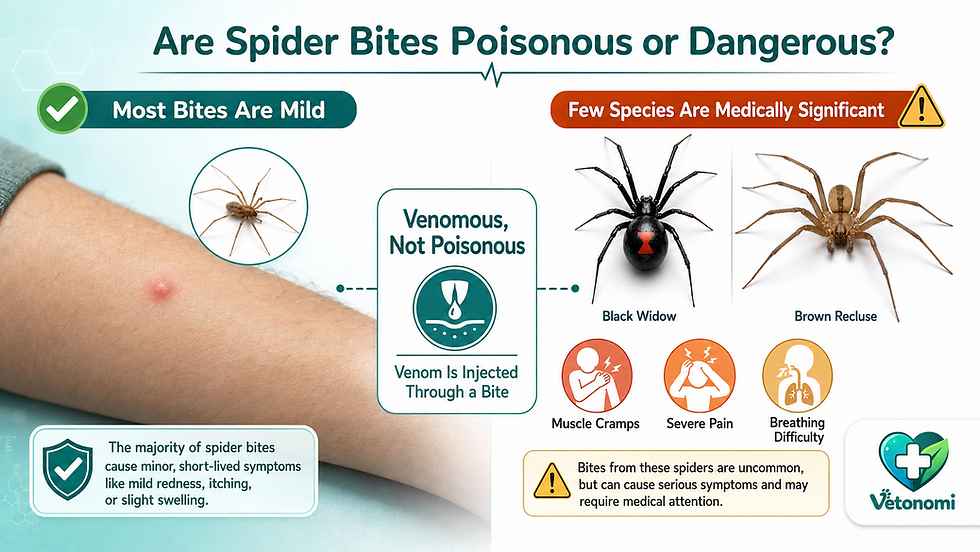
Nearly all spiders produce venom to immobilize their prey, but most species cannot seriously harm humans. Their fangs may be too small to penetrate human skin, or their venom may have little effect on people. Therefore, most spider bites are uncomfortable rather than dangerous.
The correct medical term is generally venomous, not poisonous. Venom is injected through a bite, while poison causes harm when swallowed, touched, or absorbed.
A small number of spider species can cause medically significant reactions. Depending on the species, their venom may affect the nervous system, trigger severe muscle pain, or damage tissue around the bite. The actual risk also depends on geographical location because dangerous species are not found in every region.
Children, older adults, and people with serious health conditions may be more vulnerable to complications. Even a bite from a typically harmless spider can occasionally cause an allergic reaction or develop a secondary bacterial infection.
A suspected spider bite should be assessed promptly if it causes severe pain, spreading skin damage, muscle cramps, vomiting, difficulty breathing, or other symptoms affecting the whole body.

Which Spiders Can Cause Medically Significant Bites?
Only a small proportion of spider species can cause serious illness in humans. The species of concern vary considerably by country and region.
Medically significant spiders include:
Widow spiders (Latrodectus species): These include black widow and redback spiders. Their venom affects the nervous system and may cause severe pain, abdominal rigidity, muscle cramps, sweating, nausea, and restlessness.
Recluse spiders (Loxosceles species): Brown recluse and related species may cause increasing pain, blistering, and skin discoloration. Some bites can produce local tissue damage, although severe necrosis is uncommon.
Funnel-web spiders: Found primarily in Australia, certain funnel-web species can cause rapidly developing neurological symptoms, heavy sweating, muscle twitching, breathing difficulty, and potentially life-threatening illness.
Brazilian wandering spiders (Phoneutria species): Found in parts of Central and South America, these spiders may cause intense pain, sweating, vomiting, rapid heart rate, and neurological symptoms.
The presence of a skin lesion does not prove that one of these spiders caused it. Geographic location, symptoms, and reliable identification of the spider are essential considerations. If it can be done without risking another bite, taking a clear photograph from a safe distance may help healthcare professionals. Do not attempt to handle or capture the spider.
How Do Spider Bite Symptoms Change Over Time?
The progression of a spider bite depends on the species involved and the individual’s response. Many minor bites remain localized and begin improving within several days, while medically significant bites may worsen over the first few hours.
A general timeline may look like this:
Immediately after the bite: The bite may go unnoticed or cause a brief stinging sensation. A small red or raised area can appear.
During the first few hours: Mild itching, tenderness, warmth, and swelling may develop. Bites involving neurotoxic venom can cause increasing pain, muscle cramps, sweating, nausea, or restlessness.
Within 24 to 48 hours: Most mild reactions stabilize or begin to improve. A more serious local reaction may develop blistering, spreading redness, worsening pain, or red-to-purple discoloration.
Over the following days: An uncomplicated bite should gradually heal. In rare cases, damaged skin may become darker, form an open sore, or show signs of secondary infection.
Drawing a line around the edge of redness and noting the time can help monitor whether it is spreading. Photographs taken under similar lighting may also document changes. Rapid progression, severe pain, fever, muscle cramps, breathing difficulty, or an enlarging wound requires prompt medical assessment.
How Can You Tell a Spider Bite From Other Skin Conditions?
It is often impossible to identify a spider bite from its appearance alone. Many people assume that an unexplained red, painful, or swollen area was caused by a spider even when no spider was seen. In reality, several other conditions can produce similar lesions.
Possible look-alikes include:
Mosquito, flea, bedbug, or tick bites
Bee and wasp stings
Allergic skin reactions
Inflamed hair follicles
Boils and abscesses
Bacterial skin infections, including cellulitis
Contact dermatitis
Shingles
Certain fungal infections
Multiple itchy bumps arranged in a cluster or line are more suggestive of fleas or bedbugs than a spider. Expanding redness, pus, increasing warmth, and worsening tenderness may indicate a bacterial infection. A circular rash that gradually enlarges after possible tick exposure requires medical evaluation.
A confirmed diagnosis is more likely when the spider was observed biting, reliably identified, and the symptoms match the expected effects of that species. Two puncture marks alone are not reliable evidence because they may be absent, invisible, or caused by something else.
What Should You Do Immediately After a Spider Bite?
Most suspected spider bites can initially be managed with simple first aid, provided that no severe symptoms are present.
Take the following steps:
Move away from the spider. Do not attempt to catch or handle it. If safe, take a clear photograph from a distance.
Wash the area. Gently clean the bite with soap and water to reduce contamination.
Apply a cold compress. Place an ice pack wrapped in a cloth over the area for approximately 10–20 minutes at a time. Never apply ice directly to the skin.
Elevate the affected limb. Keeping an arm or leg raised may help reduce swelling.
Avoid scratching. Scratching can damage the skin and increase the risk of infection.
Monitor the reaction. Note changes in pain, swelling, color, and size. Photographing the area can make progression easier to track.
Contact a healthcare professional or poison control service if the spider may be medically significant or its identity is uncertain and symptoms are worsening. Severe pain, muscle spasms, vomiting, breathing difficulty, faintness, confusion, or rapidly spreading skin changes require urgent medical care.
Pressure immobilization bandaging is recommended for certain dangerous Australian funnel-web spider bites, but it is not appropriate for every spider bite. Regional emergency-service or poison-center instructions should always take priority.
How Are Spider Bites Treated?
Treatment depends on the severity of the reaction and whether a medically significant spider is suspected. Most mild bites improve with supportive care and do not require a specific antidote.
Home care may include:
Washing the bite with soap and water
Applying a wrapped cold pack for short intervals
Elevating the affected limb
Using an appropriate over-the-counter pain reliever
Taking an oral antihistamine for itching when medically suitable
Keeping the area clean and protected from scratching
A pharmacist or healthcare professional can advise whether these medicines are safe based on the person’s age, medical conditions, pregnancy status, and other medications.
Severe bites may require hospital monitoring, prescription pain relief, treatment for muscle spasms, intravenous fluids, breathing support, or other symptom-specific care. Antivenom is available for certain dangerous spiders in some regions, but it is reserved for suitable cases and must be administered by medical professionals.
Antibiotics do not treat spider venom and are not routinely needed. They may be prescribed only when there is evidence of a secondary bacterial infection. Blisters, dark skin, or open wounds should be professionally assessed rather than treated aggressively at home.
What Should You Avoid Doing to a Spider Bite?
Incorrect first aid can irritate the skin, delay proper treatment, or cause additional tissue damage. After a suspected spider bite, avoid the following:
Do not cut or puncture the bite.
Do not try to suck out the venom.
Do not apply a tight tourniquet.
Do not place ice directly against the skin.
Do not squeeze or intentionally burst a blister.
Do not apply heat, electrical current, chemicals, or unverified home remedies.
Do not take antibiotics left over from a previous illness.
Do not attempt to capture the spider with your bare hands.
Do not ignore rapidly worsening pain or systemic symptoms.
Avoid applying substances such as vinegar, baking soda, bleach, essential oils, or tobacco to the wound. These treatments do not neutralize spider venom and may cause irritation or chemical injury.
The bite should also not be repeatedly scratched or picked. If clothing rubs against it, cover the area loosely with a clean, non-stick dressing. Seek medical advice rather than attempting to remove damaged tissue or drain the wound at home.
When Should You Seek Medical Help?
Seek prompt medical advice if the spider may belong to a medically significant species, the bite is worsening, or the diagnosis is uncertain. Early assessment is especially important for children, older adults, pregnant people, and individuals with serious underlying health conditions.
Contact a healthcare professional if you notice:
Pain, redness, or swelling that continues to increase
A blister, open sore, or darkening skin
Redness spreading away from the bite
Symptoms that do not begin improving within a few days
Increasing warmth, tenderness, or discharge
Fever or swollen lymph nodes
A bite close to the eye, mouth, or throat
A suspected bite from a widow, recluse, funnel-web, or another dangerous spider
Seek emergency medical help immediately if the person develops:
Difficulty breathing or swallowing
Swelling of the face, lips, tongue, or throat
Fainting, confusion, or severe weakness
Intense or spreading pain
Severe muscle cramps or abdominal rigidity
Repeated vomiting
Heavy sweating or uncontrolled muscle twitching
Rapidly progressing skin damage
Do not wait for a distinctive skin mark to appear when severe symptoms are present. Some dangerous bites primarily affect the nervous system and may not initially produce dramatic changes at the bite site.
What Are the Signs of an Infected Spider Bite?
Spider bites do not automatically become infected. However, bacteria can enter when the skin is broken, particularly if the area is scratched, squeezed, or treated with unclean materials.
Possible signs of infection include:
Redness that continues to expand
Increasing warmth and swelling
Worsening tenderness or throbbing pain
Pus or cloudy discharge
An unpleasant odor from the wound
Red streaks extending away from the area
Fever, chills, or feeling generally unwell
Swollen lymph nodes near the affected region
A wound that is not healing
Some inflammation is expected shortly after a bite and does not necessarily indicate infection. Antibiotics are generally unnecessary unless a healthcare professional finds evidence of a bacterial infection.
A painful, pus-filled lesion may be a boil or skin abscess rather than a spider bite. It should not be squeezed or drained at home. Rapidly spreading redness, fever, red streaks, significant swelling, or worsening illness requires urgent medical assessment.
Can Spider Bites Cause Allergic Reactions?
Yes, a spider bite can occasionally trigger an allergic reaction. Most reactions remain limited to mild redness, swelling, or itching around the bite, but some people may develop more extensive symptoms.
Signs of a mild allergic reaction may include:
Increased itching
A raised rash or hives
Swelling extending beyond the bite
Warm or irritated skin
A severe allergic reaction known as anaphylaxis is rare but potentially life-threatening. Warning signs include:
Difficulty breathing or wheezing
Tightness in the throat
Swelling of the lips, tongue, face, or throat
Trouble swallowing
Dizziness, confusion, or fainting
A rapid or weak pulse
Widespread hives
Nausea, vomiting, or abdominal discomfort
Call emergency services immediately if these symptoms appear. Anyone who has been prescribed an epinephrine auto-injector should use it according to their emergency plan and still obtain urgent medical help. Antihistamines are not a substitute for epinephrine in anaphylaxis.
How Long Does a Spider Bite Take to Heal?
A mild spider bite will often begin improving within a few days and may heal completely within one to two weeks. Redness, itching, or a small amount of swelling can persist during this period, but the overall trend should be toward improvement.
Healing time may be longer when:
The local reaction is extensive
A blister or open wound develops
The bite becomes infected
The affected area is repeatedly scratched
The person has diabetes, poor circulation, or a weakened immune system
A medically significant spider caused the bite
More serious wounds involving skin damage can take several weeks or occasionally months to heal and may require ongoing wound care. Tissue damage should be assessed by a healthcare professional, as aggressive home treatment can make the injury worse.
During recovery, keep the area clean and monitor it for changes. Seek medical advice if pain, swelling, or discoloration increases; the wound produces pus; fever develops; or the bite is not showing gradual improvement.
How Can Spider Bites Be Prevented?
Spider bites are uncommon and usually occur when a spider becomes trapped against the skin. Reducing contact with hidden spiders can further lower the risk.
Useful precautions include:
Shake out shoes, clothing, towels, and bedding before using them.
Wear gloves when moving firewood, boxes, rocks, or stored materials.
Wear long sleeves, trousers, and closed shoes while working in sheds, garages, basements, or gardens.
Keep storage areas clean and reduce clutter where spiders can hide.
Store rarely used items in sealed plastic containers rather than open cardboard boxes.
Move beds slightly away from walls and avoid allowing bedding to touch the floor.
Seal cracks around doors, windows, walls, and utility openings.
Remove webs carefully with a vacuum or long-handled tool.
Avoid reaching into dark spaces that cannot be seen clearly.
Inspect luggage and clothing after travelling in regions with medically significant spiders.
Spiders generally do not seek out humans to bite. Avoid handling unfamiliar species, and teach children not to touch spiders with their bare hands.
Frequently Asked Questions About Spider Bites
Do all spider bites leave two puncture marks?
No. Fang marks may be too small to see, and many confirmed bites do not leave two clearly visible punctures. Their presence or absence cannot confirm or exclude a spider bite.
Are all spider bites venomous?
Most spiders use venom to capture prey, but the venom of the vast majority of species causes little or no harm to humans. Only a small number can cause medically significant illness.
Can a spider bite cause skin necrosis?
Certain recluse spider bites have been associated with local tissue damage, but necrosis is uncommon. Many wounds attributed to spiders are actually bacterial infections or other skin conditions and require medical evaluation.
Should I take antibiotics after a spider bite?
Not routinely. Antibiotics do not neutralize venom and should only be used when a healthcare professional diagnoses a secondary bacterial infection.
Can I identify a spider bite from a photograph?
A photograph may help document changes, but appearance alone is rarely enough to confirm the cause. Diagnosis also depends on symptoms, location, exposure history, and whether the spider was reliably identified.
Should I capture the spider for identification?
Do not risk another bite. If it can be done safely, take a clear photograph from a distance. Never handle an unfamiliar spider with your bare hands.
Can a spider bite be fatal?
Fatal spider bites are extremely rare, particularly where rapid emergency treatment and appropriate antivenom are available. Nevertheless, breathing difficulty, severe muscle symptoms, fainting, or rapidly worsening illness requires immediate medical care.
Conclusion
Most spider bites cause only mild redness, itching, swelling, or tenderness and improve with basic wound care. The affected area should be washed with soap and water, cooled with a wrapped cold pack, protected from scratching, and monitored for changes.
However, it is difficult to diagnose a spider bite from appearance alone. Bacterial infections, allergic reactions, and bites from other insects can produce similar skin lesions. Unless a spider was observed biting and reliably identified, other causes should remain under consideration.
Seek prompt medical attention if pain or swelling continues to worsen, the skin becomes dark or develops an open wound, signs of infection appear, or symptoms spread beyond the bite area. Difficulty breathing, facial or throat swelling, fainting, severe muscle cramps, repeated vomiting, and rapidly progressing symptoms require emergency care.
References
Source | Open Link |
Centers for Disease Control and Prevention (CDC) – Venomous Spiders at Work | |
CDC Yellow Book – Poisonings, Envenomations, and Toxic Exposures During Travel | |
MedlinePlus – Brown Recluse Spider Bite | |
MedlinePlus – Black Widow Spider Bite | |
NHS – Insect Bites and Stings | |
Healthdirect Australia – Spider Bites: Treatment, Symptoms and First Aid | |
Queensland Poisons Information Centre – Spider Bites | |
Australian and New Zealand Committee on Resuscitation – First Aid Management of Spider Bite | |
Mersin Vetlife Veterinary Clinic |

Comments