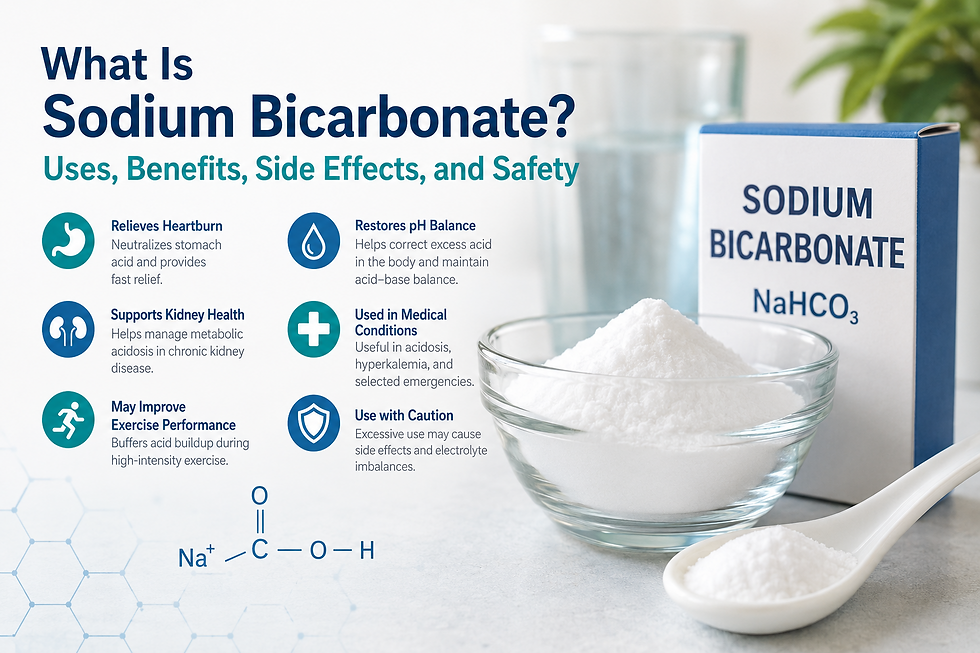
What Is Sodium Bicarbonate? Uses, Benefits, Side Effects, and Safety

What Is Sodium Bicarbonate Used For?
Sodium bicarbonate has a wide range of medical uses because of its ability to reduce acidity and restore normal pH balance. Depending on the condition being treated, it may be taken orally or administered intravenously by healthcare professionals.
Heartburn and Acid Indigestion
One of the most common uses of sodium bicarbonate is the short-term relief of heartburn, acid indigestion, and sour stomach. By neutralizing excess stomach acid, it can provide rapid symptom relief. However, it should not be used regularly without medical supervision, as frequent use may mask more serious digestive conditions.
Acid Reflux (GERD)
Some people use sodium bicarbonate to temporarily relieve symptoms of gastroesophageal reflux disease (GERD). While it may reduce burning sensations caused by stomach acid, it does not prevent acid reflux from occurring and is not considered a long-term treatment for GERD.
Metabolic Acidosis
Sodium bicarbonate plays an important role in treating metabolic acidosis, a condition in which the body's fluids become excessively acidic. This problem may occur in severe kidney disease, diabetic ketoacidosis, prolonged diarrhea, or certain poisonings. In moderate to severe cases, sodium bicarbonate is typically administered intravenously under close medical supervision.
Hyperkalemia
In some emergency situations, sodium bicarbonate may be used as part of the treatment for hyperkalemia (high blood potassium levels). By correcting acidosis, it can temporarily encourage potassium to move from the bloodstream into cells, helping reduce dangerously high potassium concentrations while other definitive treatments take effect.
Urine Alkalinization
Healthcare providers sometimes prescribe sodium bicarbonate to increase urine pH. Making the urine less acidic may help prevent certain types of kidney stones and can enhance the elimination of specific medications or toxins during selected poisonings.
Chronic Kidney Disease
Some people with chronic kidney disease (CKD) develop metabolic acidosis because their kidneys cannot remove acid effectively. Under medical supervision, sodium bicarbonate therapy may help maintain a healthier acid-base balance and, in selected patients, may slow some complications associated with chronic metabolic acidosis.
Selected Emergency Situations
Intravenous sodium bicarbonate may also be used in carefully selected emergency settings, including certain drug overdoses, severe acid-base disturbances, and specific cardiac arrest scenarios, when recommended by established clinical guidelines. Its use in these situations requires careful monitoring because inappropriate administration can also cause complications.
Although sodium bicarbonate has many valuable medical applications, it is not appropriate for every patient or every type of acidity-related condition. The correct dose, duration of treatment, and route of administration depend on the individual's medical history, laboratory findings, and the condition being treated. Continuing symptoms despite treatment should always be assessed by a qualified healthcare professional.

What Is Sodium Bicarbonate?
Sodium bicarbonate is a medication and chemical compound commonly used to neutralize excess acid in the body. It belongs to a group of medicines known as systemic alkalinizing agents and is widely prescribed to treat conditions associated with excessive acidity, such as heartburn, acid indigestion, metabolic acidosis, and certain kidney-related disorders. Outside of medicine, sodium bicarbonate is also known as baking soda, although products intended for medical use should always be used according to healthcare guidance.
Chemically, sodium bicarbonate has the formula NaHCO₃. It works as a buffer, helping maintain the body's acid-base balance by reacting with excess hydrogen ions to form water and carbon dioxide. This buffering action makes it valuable in both emergency and routine medical care.
Sodium bicarbonate is available in several forms, including:
Oral tablets
Powder for oral solution
Effervescent tablets
Intravenous (IV) injections administered in hospitals
Although many people associate sodium bicarbonate with home remedies, it is also an important medication used in hospitals for managing serious medical conditions such as severe metabolic acidosis, certain drug overdoses, hyperkalemia (high potassium levels), and cardiac arrest in selected situations. Because excessive sodium bicarbonate intake can disturb electrolyte and acid-base balance, it should be used carefully and according to medical advice.
It is important to understand that while sodium bicarbonate can temporarily relieve symptoms caused by excess stomach acid, it does not treat the underlying cause of chronic digestive disorders such as gastroesophageal reflux disease (GERD) or peptic ulcers. Persistent symptoms should always be evaluated by a healthcare professional.

Health Benefits of Sodium Bicarbonate
When used appropriately and under medical guidance, sodium bicarbonate can provide several important health benefits. Most of these benefits result from its ability to neutralize excess acid and restore the body's normal acid-base balance. However, its effectiveness depends on the condition being treated, and not all claimed benefits are supported by strong scientific evidence.
Provides Fast Relief from Heartburn
One of the best-known benefits of sodium bicarbonate is its ability to quickly relieve heartburn, acid indigestion, and sour stomach. After it reaches the stomach, it reacts with hydrochloric acid to produce water, carbon dioxide, and sodium chloride, reducing stomach acidity within minutes. Because of its rapid action, sodium bicarbonate is often used for occasional episodes of heartburn rather than long-term acid control.
Helps Correct Metabolic Acidosis
Sodium bicarbonate is an essential treatment for metabolic acidosis, a condition in which the body's fluids become too acidic. Restoring normal blood pH helps maintain proper cellular function, supports cardiovascular stability, and improves the effectiveness of many metabolic processes. In severe cases, intravenous sodium bicarbonate may be lifesaving when used appropriately.
Supports Certain People with Chronic Kidney Disease
Patients with chronic kidney disease (CKD) may gradually develop metabolic acidosis as kidney function declines. Long-term sodium bicarbonate therapy, when prescribed by a healthcare provider, can help maintain healthier bicarbonate levels, reduce complications associated with chronic acidosis, and may slow the progression of kidney disease in selected individuals.
May Improve High-Intensity Exercise Performance
Some athletes use sodium bicarbonate before intense physical activity because it may help buffer the accumulation of lactic acid produced during vigorous exercise. Several studies suggest that this buffering effect can improve performance during short-duration, high-intensity activities such as sprinting, rowing, swimming, and cycling. However, gastrointestinal side effects are common, and supplementation should only be considered with appropriate professional guidance.
May Assist in Managing Certain Poisonings
In emergency medicine, sodium bicarbonate is sometimes used to treat specific drug overdoses, particularly those involving tricyclic antidepressants and certain medications that affect cardiac conduction. By increasing blood pH and altering drug distribution, it may reduce toxicity in carefully selected cases. This treatment should only be performed in a hospital setting.
Helps Alkalinize the Urine
Sodium bicarbonate can increase the pH of urine, making it less acidic. Urine alkalinization may be beneficial in selected medical situations, including the management of certain kidney stones and to enhance the elimination of specific toxins or medications under medical supervision.
Although sodium bicarbonate offers several proven medical benefits, it is not a general health supplement and should not be taken routinely without a clear medical indication. Excessive or unnecessary use can lead to electrolyte imbalances, fluid retention, metabolic alkalosis, and other potentially serious complications.

How Does Sodium Bicarbonate Work?
Sodium bicarbonate works by acting as a buffer, a substance that helps maintain the body's normal acid-base balance. After administration, it dissociates into sodium (Na⁺) and bicarbonate (HCO₃⁻) ions. The bicarbonate ion then binds with excess hydrogen ions (H⁺), which are responsible for increased acidity.
This chemical reaction produces carbonic acid (H₂CO₃), which is rapidly converted into water (H₂O) and carbon dioxide (CO₂). The carbon dioxide is then removed from the body through the lungs during normal breathing. As excess hydrogen ions are eliminated, the acidity of the blood or stomach contents decreases, allowing the body's pH to move toward its normal range.
Neutralizing Stomach Acid
When taken orally for heartburn or acid indigestion, sodium bicarbonate reacts directly with hydrochloric acid in the stomach. This neutralization rapidly reduces stomach acidity, which helps relieve symptoms such as burning, discomfort, and acid regurgitation. Because it works almost immediately, it provides faster symptom relief than many medications that reduce acid production.
Restoring Blood pH
In patients with metabolic acidosis, sodium bicarbonate increases circulating bicarbonate levels, helping restore normal blood pH. Maintaining an appropriate pH is essential because even small changes in blood acidity can impair the function of enzymes, muscles, the heart, and the nervous system.
Supporting Electrolyte Balance
Correcting acidosis can also influence the movement of electrolytes between cells and the bloodstream. For example, treating metabolic acidosis with sodium bicarbonate may temporarily lower elevated blood potassium levels by promoting the movement of potassium into cells. This effect can be useful during the emergency management of hyperkalemia.
Buffering During Intense Exercise
During vigorous exercise, muscles produce large amounts of hydrogen ions along with lactate, contributing to muscle fatigue. Sodium bicarbonate increases the buffering capacity of the blood, helping neutralize these hydrogen ions and delay the decline in muscle performance during short, high-intensity activities. The benefit is generally modest and varies between individuals.
Although sodium bicarbonate is highly effective at reducing acidity, its effects are temporary. The underlying cause of acid-related conditions often requires separate evaluation and treatment. For this reason, sodium bicarbonate should be viewed as a supportive therapy rather than a cure for chronic medical conditions.
How to Take Sodium Bicarbonate Safely
Sodium bicarbonate should always be taken exactly as directed by your healthcare provider or according to the product label. The appropriate dose depends on the condition being treated, your age, kidney function, and overall health. Taking more than recommended or using it for prolonged periods without medical advice can increase the risk of serious side effects.
Oral Tablets
Sodium bicarbonate tablets should be swallowed with a full glass of water. They may be taken with or without food unless your healthcare provider recommends otherwise. Avoid taking additional doses sooner than instructed, even if symptoms persist.
Powder for Oral Solution
If using sodium bicarbonate powder, measure the prescribed amount carefully and dissolve it completely in water before drinking. Never swallow the dry powder directly, as it may irritate the mouth and throat and may not dissolve properly in the stomach.
Effervescent Tablets
Effervescent tablets must be dissolved completely in the recommended amount of water before consumption. Do not chew or swallow the tablets whole. Wait until the fizzing has stopped before drinking the solution.
Intravenous Administration
Intravenous (IV) sodium bicarbonate is reserved for hospital use. It is administered by trained healthcare professionals in carefully controlled doses while monitoring blood pH, electrolyte levels, and overall clinical status.
General Safety Tips
To reduce the risk of complications, follow these recommendations:
Use sodium bicarbonate only for the condition it was prescribed or recommended for.
Do not exceed the recommended dose or duration of treatment.
Drink adequate fluids unless your healthcare provider has advised fluid restriction.
Inform your healthcare provider about all prescription medications, over-the-counter drugs, and dietary supplements you are taking.
Contact a healthcare professional if your symptoms persist, worsen, or recur frequently.
Although sodium bicarbonate may provide rapid symptom relief, repeated or long-term self-treatment may delay the diagnosis of more serious underlying medical conditions.
Recommended Dosage
The correct dosage of sodium bicarbonate varies depending on the medical condition being treated, the formulation used, and individual patient factors. The following information is intended as a general overview and should not replace personalized medical advice.
Adults
For occasional heartburn or acid indigestion, adults commonly take oral sodium bicarbonate according to the manufacturer's instructions or their healthcare provider's recommendations. Treatment is generally intended for short-term use only.
For conditions such as metabolic acidosis, dosing is individualized based on laboratory results, body weight, and the severity of the acid-base imbalance. Hospitalized patients receiving intravenous sodium bicarbonate require continuous monitoring to avoid complications.
Children
Sodium bicarbonate should only be given to children under the guidance of a qualified healthcare professional. Pediatric dosing varies considerably depending on age, body weight, and the specific medical condition being treated.
Missed Dose
If you forget to take a scheduled dose, take it as soon as you remember unless it is almost time for your next dose. Do not take two doses at the same time or take extra medicine to make up for a missed dose.
Overdose
Taking excessive amounts of sodium bicarbonate may lead to serious complications, including:
Metabolic alkalosis
High blood sodium levels (hypernatremia)
Low potassium levels (hypokalemia)
Fluid retention and swelling
Muscle weakness
Confusion
Irregular heart rhythms
Seizures in severe cases
Seek immediate medical attention or contact your local poison center if an overdose is suspected.
Long-Term Use
Sodium bicarbonate is not intended for routine long-term self-treatment of heartburn or acid reflux. Frequent or prolonged use may indicate an underlying medical condition that requires proper evaluation. Long-term therapy should only be continued under medical supervision, with periodic monitoring of electrolyte levels, kidney function, and acid-base status to ensure safe treatment.
Possible Side Effects of Sodium Bicarbonate
Like all medications, sodium bicarbonate can cause side effects, although not everyone experiences them. The risk of adverse effects generally increases with high doses, prolonged use, underlying medical conditions, or improper use. Most mild side effects resolve after discontinuing the medication, but serious reactions require immediate medical attention.
Common Side Effects
Some people may experience mild gastrointestinal symptoms, including:
Belching
Bloating
Stomach discomfort
Gas caused by carbon dioxide production
Mild nausea
These effects are usually temporary and occur because sodium bicarbonate reacts with stomach acid to produce carbon dioxide gas.
Fluid Retention and Swelling
Because sodium bicarbonate contains sodium, excessive intake may lead to fluid retention (edema). This can cause swelling in the legs, ankles, hands, or feet and may worsen conditions such as heart failure, kidney disease, or high blood pressure.
Electrolyte Imbalances
Taking too much sodium bicarbonate can alter the body's electrolyte balance and may result in:
High sodium levels (hypernatremia)
Low potassium levels (hypokalemia)
Low calcium levels (hypocalcemia)
These abnormalities may lead to muscle weakness, fatigue, muscle cramps, irregular heart rhythms, or neurological symptoms.
Metabolic Alkalosis
One of the most important risks of excessive sodium bicarbonate use is metabolic alkalosis, a condition in which the body's pH becomes abnormally alkaline. Symptoms may include:
Confusion
Dizziness
Muscle twitching
Tremors
Tingling of the hands or face
Slow or shallow breathing
Severe muscle cramps
Metabolic alkalosis requires prompt medical evaluation and treatment.
Serious Allergic Reactions
Although uncommon, allergic reactions can occur. Seek emergency medical care immediately if you develop:
Difficulty breathing
Swelling of the face, lips, tongue, or throat
Severe rash or hives
Sudden dizziness or fainting
Rare but Serious Complications
In rare cases, inappropriate sodium bicarbonate use may contribute to:
Irregular heart rhythms
Seizures
Severe electrolyte disturbances
Worsening kidney function
Excessive fluid overload
Milk-alkali syndrome when combined with large amounts of calcium-containing products
If you develop persistent vomiting, severe weakness, chest pain, confusion, or difficulty breathing while taking sodium bicarbonate, seek immediate medical attention.
Who Should Not Take Sodium Bicarbonate?
Although sodium bicarbonate is generally safe when used appropriately, it is not suitable for everyone. Certain medical conditions can increase the risk of serious complications, making healthcare supervision essential.
People with High Blood Pressure
Sodium bicarbonate contains a significant amount of sodium. Individuals with hypertension may experience worsening blood pressure control if they consume excessive amounts. Healthcare providers may recommend alternative treatments that do not increase sodium intake.
People with Heart Failure
Patients with heart failure should use sodium bicarbonate cautiously because the additional sodium can promote fluid retention, increasing the workload on the heart and potentially worsening symptoms such as swelling and shortness of breath.
People with Kidney Disease
The kidneys play a key role in regulating sodium, bicarbonate, and fluid balance. Although sodium bicarbonate is sometimes prescribed to treat metabolic acidosis in chronic kidney disease, patients with impaired kidney function require careful monitoring to avoid electrolyte disturbances and fluid overload.
People Following a Sodium-Restricted Diet
Individuals advised to limit sodium intake due to heart disease, kidney disease, liver disease, or other medical conditions should consult their healthcare provider before taking sodium bicarbonate, even when it is available over the counter.
People with Existing Metabolic Alkalosis
Sodium bicarbonate should not be used in patients who already have metabolic alkalosis, as it may further increase blood pH and worsen the condition.
People with Low Calcium or Low Potassium Levels
Because sodium bicarbonate can influence electrolyte balance, people with hypocalcemia or hypokalemia may require correction of these abnormalities before or during treatment.
Pregnancy and Breastfeeding
Sodium bicarbonate should only be used during pregnancy or breastfeeding if recommended by a healthcare professional. Although occasional medically appropriate use may be acceptable in some situations, unnecessary self-treatment should be avoided.
Children
Children should only receive sodium bicarbonate under medical supervision. Proper dosing depends on age, weight, and the condition being treated, and incorrect dosing may increase the risk of serious complications.
Older Adults
Older adults may be more susceptible to sodium overload, fluid retention, and electrolyte imbalances due to age-related changes in kidney function and the presence of multiple chronic medical conditions. Careful monitoring is often recommended.
If you have chronic medical conditions, take multiple medications, or are unsure whether sodium bicarbonate is appropriate for you, consult your healthcare provider before starting treatment. Proper medical evaluation helps ensure that the potential benefits outweigh the risks.
Drug Interactions
Sodium bicarbonate can interact with a variety of medications by changing the acidity (pH) of the stomach or urine or by altering the body's electrolyte balance. These interactions may reduce the effectiveness of certain drugs or increase the risk of side effects. Before taking sodium bicarbonate, tell your healthcare provider about all prescription medications, over-the-counter drugs, vitamins, and herbal supplements you use.
Antibiotics
Sodium bicarbonate may reduce the absorption of certain antibiotics, particularly:
Tetracyclines
Fluoroquinolones
To minimize this interaction, these antibiotics are generally taken at least 2 hours before or 4–6 hours after sodium bicarbonate, unless otherwise directed by a healthcare professional.
Iron Supplements
Iron requires an acidic stomach environment for optimal absorption. Because sodium bicarbonate reduces stomach acidity, it may decrease the amount of iron absorbed by the body. Taking iron supplements and sodium bicarbonate several hours apart may help reduce this interaction.
Antifungal Medications
Some oral antifungal medications, such as ketoconazole, require stomach acid for proper absorption. Sodium bicarbonate may decrease their effectiveness by increasing stomach pH.
Aspirin and Salicylates
Sodium bicarbonate can change the urinary excretion of aspirin and other salicylates by alkalinizing the urine. This may affect blood concentrations of these medications and should be considered in certain clinical situations.
Lithium
Changes in sodium balance can influence lithium levels in the blood. People taking lithium should not use sodium bicarbonate regularly without medical supervision, as fluctuations in lithium concentrations may increase the risk of toxicity or reduce treatment effectiveness.
Diuretics
Some diuretics, particularly those that lower potassium levels, may increase the risk of electrolyte disturbances when combined with sodium bicarbonate. Monitoring of electrolyte levels may be necessary during treatment.
Other Medications
Sodium bicarbonate may also interact with medications whose absorption depends on stomach acidity or whose elimination is influenced by urine pH. Healthcare providers may recommend adjusting the timing of doses or selecting an alternative treatment when necessary.
Never start, stop, or change the dosage of sodium bicarbonate without consulting your healthcare provider if you are taking other medications.
When Should You See a Doctor?
Occasional heartburn or indigestion often improves with short-term treatment, but persistent or severe symptoms should not be ignored. Sodium bicarbonate may temporarily relieve symptoms without addressing the underlying cause, making medical evaluation important when symptoms continue.
Seek medical advice if:
Heartburn occurs frequently or lasts for more than two weeks.
You need sodium bicarbonate regularly to control symptoms.
Symptoms continue despite following the recommended dosage.
Heartburn is accompanied by unexplained weight loss, difficulty swallowing, or persistent nausea.
You experience repeated vomiting or severe abdominal pain.
Seek Emergency Medical Care Immediately If You Experience:
Chest pain that may resemble a heart attack
Difficulty breathing
Vomiting blood or material that looks like coffee grounds
Black, tarry, or bloody stools
Severe confusion or loss of consciousness
Seizures
Severe swelling of the face, lips, tongue, or throat
Signs of a severe allergic reaction
These symptoms may indicate a serious medical condition that requires immediate treatment.
Early evaluation can help identify underlying disorders such as gastroesophageal reflux disease (GERD), peptic ulcers, gastrointestinal bleeding, kidney disease, or metabolic disorders that may require treatments beyond sodium bicarbonate.
Frequently Asked Questions
Is sodium bicarbonate the same as baking soda?
Yes. Sodium bicarbonate is the chemical name for baking soda. However, pharmaceutical sodium bicarbonate products are manufactured for medical use and should be used according to healthcare recommendations.
What is sodium bicarbonate used for?
Sodium bicarbonate is used to treat conditions such as heartburn, acid indigestion, metabolic acidosis, selected cases of hyperkalemia, urine alkalinization, and certain medical emergencies under professional supervision.
Can I take sodium bicarbonate every day?
Routine daily use without medical supervision is not recommended. Frequent use may indicate an underlying medical condition that requires proper diagnosis and treatment.
Is sodium bicarbonate safe during pregnancy?
Pregnant individuals should only use sodium bicarbonate if recommended by their healthcare provider. Self-treatment during pregnancy should be avoided unless medically advised.
Can sodium bicarbonate raise blood pressure?
It can contribute to elevated blood pressure in some individuals because it contains sodium, which may cause fluid retention and increase blood volume.
Can sodium bicarbonate affect kidney function?
When prescribed appropriately, sodium bicarbonate may benefit certain people with chronic kidney disease who have metabolic acidosis. However, inappropriate use or excessive doses may worsen fluid and electrolyte imbalances, especially in people with impaired kidney function.
Can sodium bicarbonate interact with medications?
Yes. Sodium bicarbonate may interact with antibiotics, iron supplements, lithium, diuretics, aspirin, antifungal medications, and other drugs. Always inform your healthcare provider about all medications you are taking.
What happens if you take too much sodium bicarbonate?
An overdose can lead to metabolic alkalosis, electrolyte imbalances, fluid overload, irregular heart rhythms, muscle weakness, confusion, and, in severe cases, seizures. Immediate medical attention is recommended if an overdose is suspected.
References
Source | Official Link |
MedlinePlus – Sodium Bicarbonate | |
DailyMed – Sodium Bicarbonate Tablets | |
U.S. Food and Drug Administration (FDA) – Drug Information | |
National Institute of Diabetes and Digestive and Kidney Diseases (NIDDK) – GER & GERD | |
National Kidney Foundation (NKF) | |
American College of Gastroenterology (ACG) Clinical Guidelines | |
American Heart Association (AHA) | |
NIH Office of Dietary Supplements (ODS) | |
PubMed – National Library of Medicine | |
World Health Organization (WHO) |



Comments